(TEST) Is Religion Patriarchal? Exploring Its Impact on Women's Lives



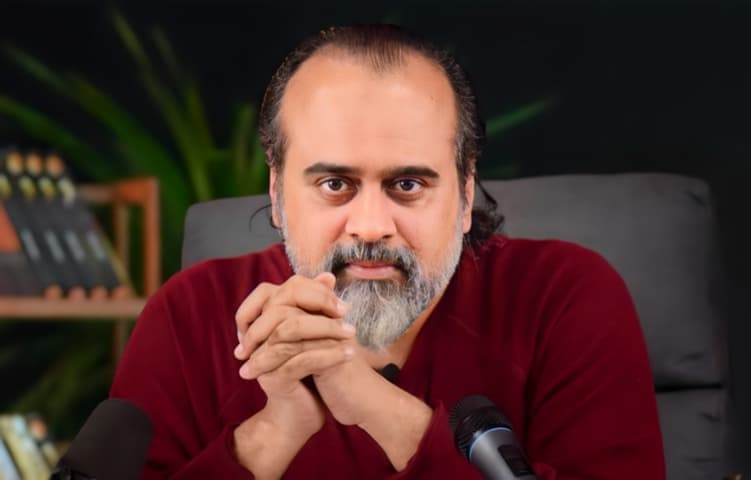
Questioner (Q): Sir, as a woman, how should I perceive religion? Religion and culture are supposed to help, but I have practically seen that religion is associated with patriarchy and misogyny. Please tell me, as women how should I look at religion? Acharya Prashant (AP): See, the relationship between women and religion has been pretty interesting and mostly tragic. On one hand, religion, rather core spirituality is the woman’s best friend; because it helps her be liberated from all that which oppresses her, and it tells her that no price is too big to be paid for liberation. The best help that self-knowledge and Vedānta extend to women is that they tell her that being women is not her primary identity, that body identification is the root cause of all kinds of suffering. And that if you can take your physical self and your mental conditioning lightly, then it will be very difficult for Prakṛti and society, even if it’s a very toxic and patriarchal society, to enslave you. The women can be enslaved only as long as she is body identified and socially conditioned. Vedānta is about the person gaining liberation from both of these—body identification and mental conditioning. So, ideally spirituality should be the woman’s best friend. But practically, evidence has been rather mixed; in fact, evidence has been that religion historically has been on the side of the oppressors when it comes to the women, oppressors of the women. The reason is that religion itself has not been well understood. Religion itself has been a victim of contamination, and when religion is contaminated then religion becomes a tool towards exploitation of women. So much so, that a lot of very negative attitudes that you see existing towards women today, they are claimed to be sanctioned by religion. Right? So, as you are saying that the women should continuously be dependent, that’s an attitude that finds its source in some so-called religious books, and there are verses exactly to this effect—that let the women never be independent. Not only that, there have been so called books that have talked of women as a very clearly inferior person; some kind of a different spies all together. “So, she is guilty of this, this, this; so many things are inferior and condemnable in her and therefore she does not merit responsibility and freedom or many other things.” Now what’s the problem here? The problem here is that these two kinds of attitude towards women are actually coming from two kinds of different religions. There is a religion that uplifts women, that’s called Vedānta ; and there is a religion that oppresses women, that’s your normal cultural religion. And whenever Vedānta will shine, one of its effects will be the emancipation and empowerment of women. Whenever the real religion will show up, it will help women and that will deeply frustrate the traditional kind of religionists, because the difference is stark. Real religion, I said is the woman’s best friend, and false religion, prevalent religion, mainstream religion, is the woman’s worst enemy. And it’s very important to differentiate between these two kinds of religions. The tragic thing is, most women themselves follow the false kind of religions. They are aghast, why I am talking to women and telling them that they are not baby producing machines, that it is not their fate to be firstly dependent on father and then on their husband; but what I am saying is Vedānta . And the amusing thing—what I am saying is probably not finding too much acceptance among women themselves. So, now the question is, who should be blamed? Religion or Women?