Recent


Overthinking
7min6reads
Questioning pseudo-science and superstition is the first step toward genuine freedom. Beliefs such as *Vastu, Kundli,* and *Muhurat* should not be accepted merely because they have been followed traditionally. Fear and attachment to privileges often prevent people from questioning authority. A truth-seeker must be willing to challenge age, status, and authority. Human progress has come through curiosity, inquiry, experimentation, and reason—not through blind obedience.

Religion
5min7reads
Questioner (Q): Sir, as a woman, how should I perceive religion? Religion and culture are supposed to help, but I have practically seen that religion is associated with patriarchy and misogyny. Please tell me, as women how should I look at religion? Acharya Prashant (AP): See, the relationship…
Bhagavad Gita
7min20reads
समोऽहं सर्वभूतेषु न मे द्वेष्योऽस्ति न प्रिय:।
ये भजन्ति तु मां भक्त्या मयि ते तेषु चाप्यहम्।।29।।
samo ’haṁ sarva-bhūteṣhu na me dveṣhyo ’sti na priyaḥ

In Media
2min60reads2
Self-harm isn’t just about physically hurting ourselves. It is also when we live unconsciously, chasing goals given to us by society and family.

Clarity
2min34reads1
A guide to handling difficult periods, adapting to unexpected changes, learning from experiences, seeking support, and continuing forward with confidence and patience.


Meditation
1min2reads
Short description for the E2E smoke test article.


In Media
1min149reads24893231
in media test articlein media test articlein media test articlein media test article

In Media
2min63reads
Originally published in Deccan Herald on 22 may '26
A mother’s fear of scarcity gets transmuted into an urgency around money which the child internalises as her own personality.
Somewhere between childhood and adulthood, an unannounced transfer occurs. A parent’s unspoken fear becomes our ambition, a family’s definition of what

In Media
1min27reads1
\"If one relies on events, shock is guaranteed, again and again, because most misdeeds never come fully to light. Scandals are not reliable teachers. If one understands the principle, shock loses its grip, because what unfolds is recognised rather than discovered.\"


In Media
1min26reads
Acharya Prashant says:\n“If you wouldn’t call this foeticide, then what would you call it? When an unborn child is killed in the womb, you consider it wrong—you call it a sin, a crime. But what do you call the way we are killing ourselves from within? Not allowing the self to manifest is suicide.”\n


In Media
4min25reads1
Switzerland’s rejection of a population cap was not simply a vote on immigration but a reflection of a deeper difficulty: defining what is “enough.” Despite wealth, stability, and low birth rates, economic interdependence made limiting growth politically and practically costly. The episode highlights a broader human tendency, individual and collective, to keep expanding goals and expectations, while rarely questioning the endless pursuit of more or asking where growth should finally stop.


In Media
5min59reads3
True yoga is not primarily about physical postures but about examining the ego, attachments, and motivations that shape one’s life. While the body can be trained and displayed, real discipline lies in honestly questioning desires, ambitions, and borrowed goals. Techniques and routines alone cannot bring inner freedom. Yoga begins when one repeatedly investigates who is setting the direction of life and whether that direction has ever been consciously examined.

In Media
24min38reads581
Sunday Guardian ColumnSunday Guardian ColumnSunday Guardian ColumnSunday Guardian ColumnSunday Guardian Column

In Media
24min28reads
"isLeading": true }, { "title": "Rashtriya Sahara", "logoId": "img-30d9ad90-bd8f-4904-a3bc-ba8d0d5d8fae", "isLeading": true }, { "title": "Swatantra Chetna", "logoId": "img-ad2c176d-d173-4f99-8857-9b19c88814f9", "isLeading": true } ] }{ "publishers": [ { "title": "The Pioneer", "logoId": "img-b652bdb9-9bcc-4ffd-bcc9-e7ef00c0a30f", "isLeading": true }, { "title": "Deccan Herald", "logoId": "img-ccc6f049-c862-49e8-a1f5-9716c16bcdae", "isLeading": true }, { "title": "The Sunday Guardian", "logoId": "img-01c6c6a9-3bc7-4af2-8bf4-eaec0d6974be",…


In Media
2min33reads11
"Look closely at what usually passes for happiness: A promotion, a holiday, approval, entertainment."

In Media
10min118reads2
"The real war is the one the ego wages against honest seeing, the war between what it is and what it insists on being taken for. It is the hunger the ego carries meeting a reality that will not satisfy it; the persistent feeling that something is missing whose name cannot be found because finding it would require looking at the one who feels it."

In Media
1min33reads1
Almost every historical crisis has produced its version of the same thought: what is happening is happening to someone else. The climate crisis has produced a version of this thought particularly well-suited to the Indian urban professional class: climate change is real, but its primary victims are the farmer without irrigation, the construction worker or the landless labourer. The crisis the middle class has assigned to someone else is visible in the city's own property markets, its own seasonal calendar, its own streets after an hour of rain, and the exemption the middle class believes it holds has already been declined, though its holders have not yet checked the correspondence.


In Media
1min11reads2
The dowry demand is typically presented in public discourse as an anachronism, a stubborn remnant of a less enlightened India that education, urbanisation, and explicit legal prohibition have somehow failed to dislodge, a framing that mistakes the institution’s most explicit expression for a departure from it. But is dowry an aberration within the institution of marriage, or the institution’s own operating logic, followed to its economic conclusion?

In Media
1min25reads
“Revolutions always promise change, and they usually deliver something that merely looks like change. Regimes collapse, flags are replaced, slogans change, but something remains untouched. The question we refuse to ask is simple: when the wheel turns again, what will have changed?”
Writings
4min57reads
Jesus stands for the Truth and Truth is omnipresent.
He is present here, and right now, in the hearts of those who love him.
Jesus is not a mere mortal. Jesus is the source of light; the root of all flowers and beauty. In one form, he disappears. In another,…

Passion
1min33reads31
What is the root cause of unhappiness? Why strength is necessary for liberation? Why ego can not reflect on itself?
Grace
1min9reads11
युवावस्था बहुत ही नाज़ुक समय होता है। यही समय निर्धारित कर देता है कि जीवन किस दिशा जाएगा।

Time Management
8min6reads
The Truth cannot be objectified as a thing, place, person, or book. So, don't be too quick to accept your own assessments, judgments, likes, dislikes, and experiences. Whatever you're seeing is seen by "you" — the Ego — and you are no absolute. Everything must be available to enquiry, investigation, and questioning — and questioning cannot happen if you declare that you’ve already come to the Truth. Never believe that the journey has ended or that the ego itself is the Truth.

Shri Krishna
3min12reads
हमारा मिजाज हमेशा दूसरों और परिस्थितियों पर निर्भर करता है। नतीजे आपकी उम्मीदों के मुताबिक नहीं रहे। इसलिए अब आपको मनोबल बढ़ाने वाले किसी प्रेरक वक्ता की ज़रूरत है। जैसे ही वह व्यक्ति चला जाता है, आपकी ऊर्जा भी थम जाती है। लेकिन जीने का एक और तरीका भी है। अपने भीतर गहराई में, मुझे एक ऐसा बिंदु मिलता है जिसे कोई बाहरी परिस्थिति छू नहीं सकती। जो कुछ भी होता है, वह सतह पर ही घटित होता है। वह स्थिर, उदासीन और तटस्थ बना रहता है। तब आप सचमुच स्वतंत्र होते हैं।

Love
5min3.2kreads81268
Love would have helped you fly. And now you have captivated love within four walls. As wise men and women, if you are married, wonderful. As wise men and women, if you are not married, wonderful. The point is not really marriage. The point is wisdom. https://dev-main8.vedant.life/en/articles/marriage-and-love-1_0ff5cad

Guru
1min45reads1
How did the Buddha look then? Who is the Buddha? Let’s try to understand with the story of Gautama Buddha, The ‘Shakya Muni Buddha’ as we call him. So, who was he? Let’s look at his central characteristics. One, someone who is well versed in the knowledge of his time. Buddha had deep scriptural knowledge. He was born in a Hindu Kshatriya family, he was a prince and ever since his childhood he was quite talented. So, one thing about him is that he was quite well-read. Second thing is, he was deeply interested in knowing the depths of life. He did not want to remain merely at the superficial levels, so he would observe a lot, he would think a lot. https://acharyaprashant.org/en/articles/todays-buddha-1_4d1b6bf

Love
8min29reads11
Questioner: A lot of students that I talk to — it’s the fear of the society, it’s the fear of the unknown, it’s fear of the expectations that they are carrying, that pushes them to become an engineer and then they figure out that probably this is not something that they wanted to be. And that is the reality of a lot of individuals and not just engineers. Probably, here is something that is stopping me from taking a plunge of starting something of myself, right? Fear is something that is stopping somebody who is in a relationship for ten years to take that step to get married. Where does this fear come from? Acharya Prashant: Lack of love, which comes from lack of self-knowledge. You see, when I tie my sense of existence, my very identity, to something that is unreliable, I will have to be afraid. It’s like putting my heart on this table. Now, how can I live in security? The heart is out there on the table, anybody can take it away, anything can happen to it. Or the heart might grow legs and walk away on its own. My very existence has been subjected to something that is not in my control. Something that is definitely going to deceive me at some point, that is fear. My sense of self-worth comes from my monies, my bank account, I will be afraid. That bank account can be closed anytime, anything can happen. My sense of self-worth comes from my physical appearance. I very well know, time will take it away, I will be afraid. Right? Who am I? I am the one who is praised or worshipped by the society. Oh! I will be so afraid, so afraid! You talked of people working for their images, they would be living a cursed life. Because, their heart is out there in the hands of strangers. Their entire identity is tied to their image and the image is in the eyes of other people. So, the image can be distorted or can disappear any moment. Just imagine, how afraid they would be all the time. That’s with the ego. Because, the ego, as I said, is a fundamental sense of incompleteness. Therefore, to complete itself, it just associates itself to anything possible. And the things that you are associating yourself with, they are not reliable. They belong to the world and the world can take them away. They belong to time. They came with time and with time all those things will disappear. And you have tied your identity to those things. Now how can you rest in peace? That’s fear. If you do not have self-knowledge, you will always be afraid. My identity is linked to my husband’s identity. Now the husband has two legs. And the husband has a brain, a mind of his own. If your identity comes from your husband’s name, as happens in India at least, you would always be afraid as a wife. The husband can change his mind any day. You would always be, you know, having one eye on his secretary, and the other eye in his email and mobile phone. What’s he getting into? Who’s texting him? Why is he on the phone so late in the night? Because you are afraid if husband goes away, what happens to you? Your very existence depends on the husband. That’s fear. When you operate from the ego centre and make something very, very important for yourself and that something belongs to the world, it can go away anytime, and you are afraid. And in that fear, there can never be love, never be love. If you are afraid of losing something, you will be very violent towards it. Nobody lets his money go and have a walk down the road. What do you do? You lock up your money. That’s violence. When something starts becoming very meaningful to you, you lock it up. You don’t want it to have freedom. And that’s violence. So, love and fear just cannot go together. If you are dependent on something or somebody, you will be afraid. And that dependence cannot be called love. And that is a confusion, we often get into it. Just because you depend on somebody and somebody depends on you, you start feeling as if it is love, it is not. Questioner: Just like the way political parties think that people love them but it actually is fear. Acharya Prashant: Exactly! Love is a rare quality and rarer in politics. Questioner: So, if I am interested in a particular profession, do I not pursue it wholeheartedly? Do I pursue it wholeheartedly knowing very well that the results can either be zero or one? Acharya Prashant: One has to go into the very nature of interest. Aren’t we interested in cricket? Aren’t we interested in seeing songs in movies? Practically, everybody in India is interested in cricket, nobody in Brazil is. And nobody in India is interested in ice hockey. So, that’s how flimsy the whole thing about interest is. In India, if you don’t get a movie with songs, you say, “I am disinterested.” The movie would bomb. In Hollywood, if you have a movie with songs, that would raise eyebrows, what’s going on? Occasionally, you have an OD song but typically there is no song. So, that is the nature of interest. It is never something of the heart. Love and interest are not the same thing. Interest is something that is given to you by your body, by your environment, by random chance, your circumstances and all these. So that’s how your interests come to you. So, if you are interested in a vocation, first of all, you have to ask yourself, “Just two years back, I was interested in something else and two years before I was interested in that and when I was four years old, I was interested in becoming a fighter pilot. What happened to all those interests?” Today, I smile at those things and just shrug them off, “I don’t want to be a fighter pilot.” What you want to be today? Oh! I want to be an investment banker. What happened to the fighter pilot? You were so interested in that. And how do you know, tomorrow you will not be looking at this I-banker, just the way today you are looking at the fighter pilot. The self of a five-year old appears so naïve and immature when you are twenty-five. How do you know that at thirty-five, you will not look back at this twenty-five year old self and say, “What the hell! How was I taking this fellow so seriously?” So, interest is something that you must look at with healthy contempt. Interest, mind you, can even be induced in you. Interest can be aroused in you. That’s what the entire advertising industry is about. They can make you feel Interested in things that is intrinsically worthless to you. So, of what value is this thing called interest? But, then in today’s world, we place so much premium on this word 'interest.' Do what interests you, this, that. Whereas, it is wisdom to realize that interest is the last thing that you should ever go after. Then people come up and say, “No, should we do things that we are not interested in? No.
1min37reads2
In media In media In media In media In media In media In media In media In media In media In media In media In media In media In media In media In media In media In media In media In media In media In media

2min32reads13
When powerful narratives in all walks of life are seeking to monopolize public conversation and crowd out, or forcefully silence dissenting voices, freedom of expression becomes even more valuable. But with this liberty comes a set of questions: Are we truly expressing ourselves, or merely reacting? Are our statements a product of inner lucidity, or are they born of internal unrest? Technology now gives us unprecedented power to communicate and connect. And this freedom comes with the responsibility of expressing from awareness and reality—not conditioning, misinformation, or chaos.
Media Articles
8min14reads
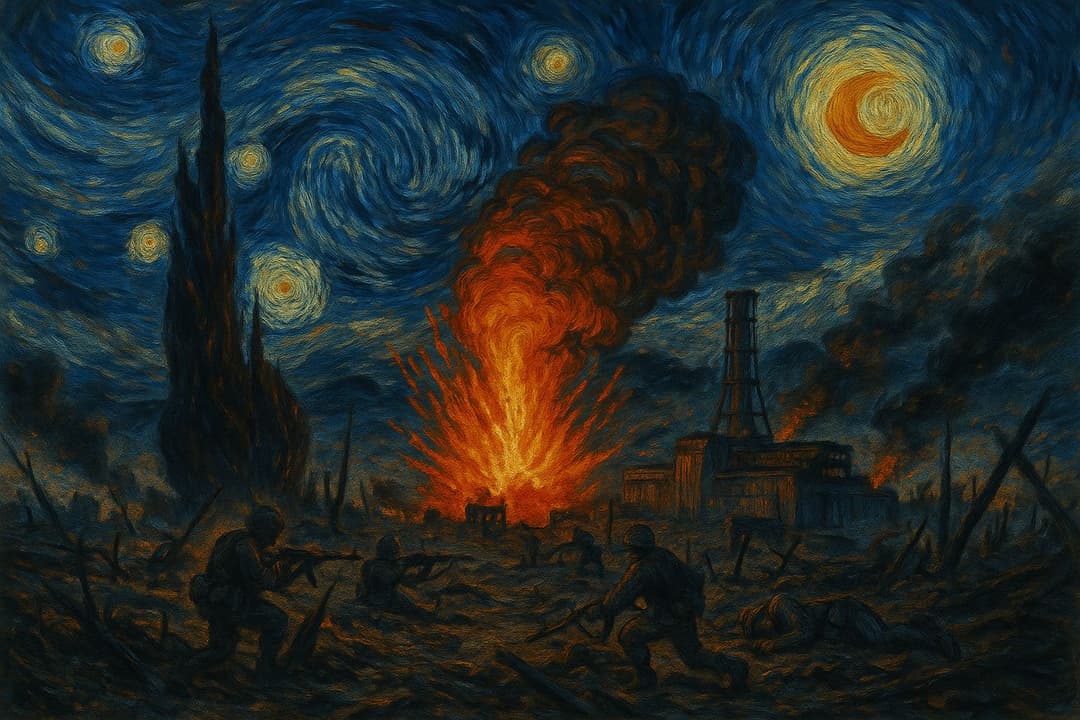
Though war may sometimes be inevitable, it should not be driven by revenge or momentary outrage. In spiritual terms, war is not necessarily forbidden.
Saint Kabir
8min26reads2
How do you, asks the chief of police, patrol a city, where the butcher shops are guarded by vultures, where bulls get pregnant, cows are barren,
Values
2min29reads
किससे मिल रहे हो? किससे नहीं मिल रहे हो? कहाँ रोज़ पहुँच जाते हो? कहाँ से पैसे ला रहे हो? पहली बात – क्या ईमानदारी से काम रहे हो? दूसरी बात – जो कमा रहे हो, उसको खर्च कहाँ कर रहे हो? छः घण्टे से कोई खबरिया चैनल लगा कर…